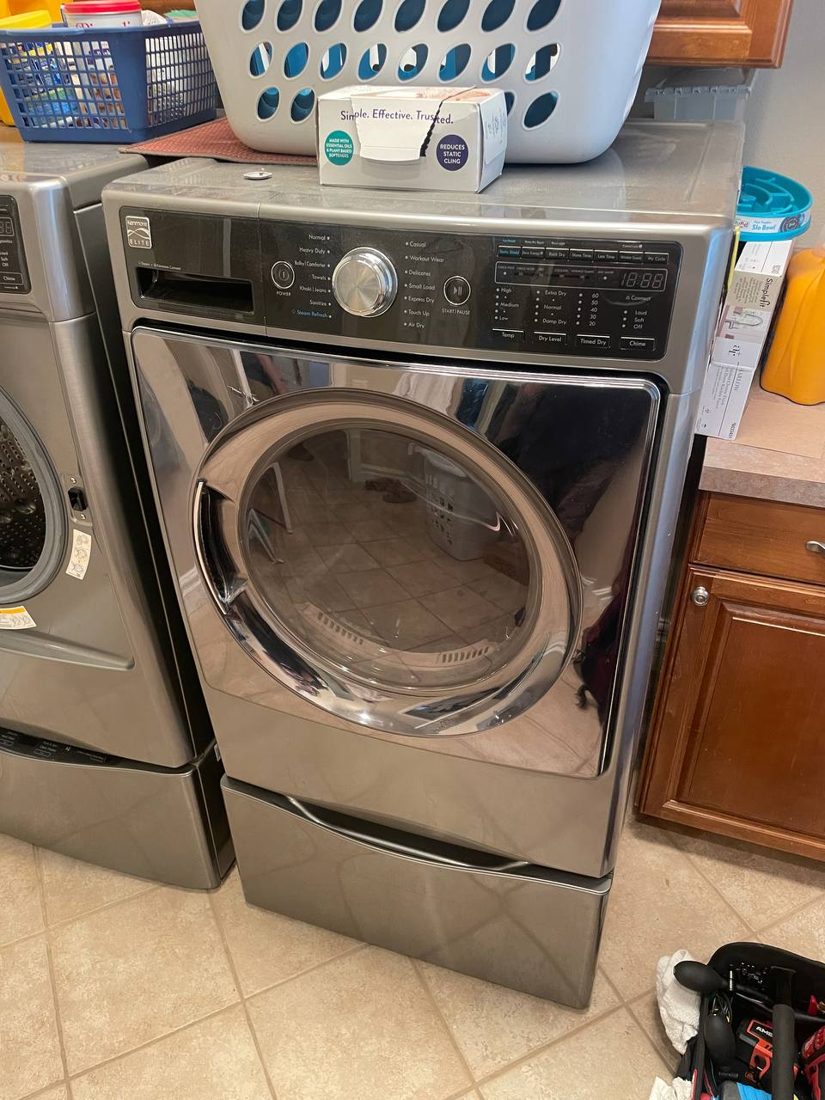
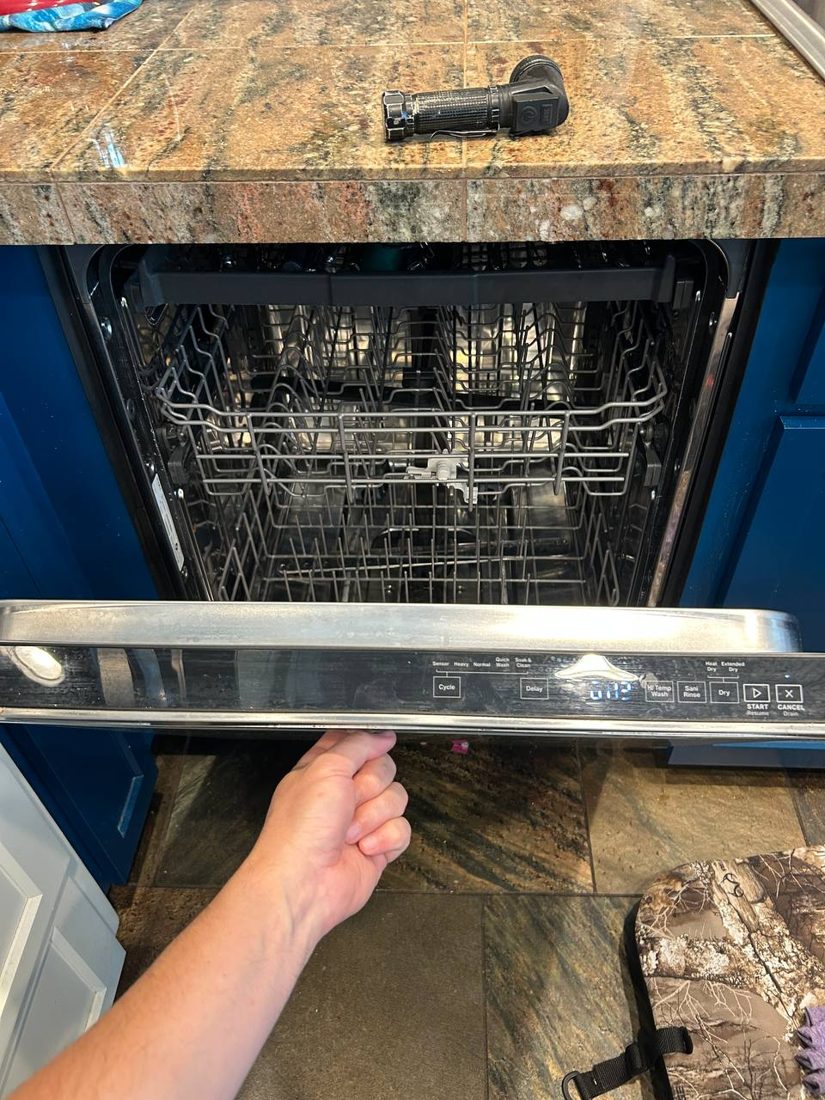
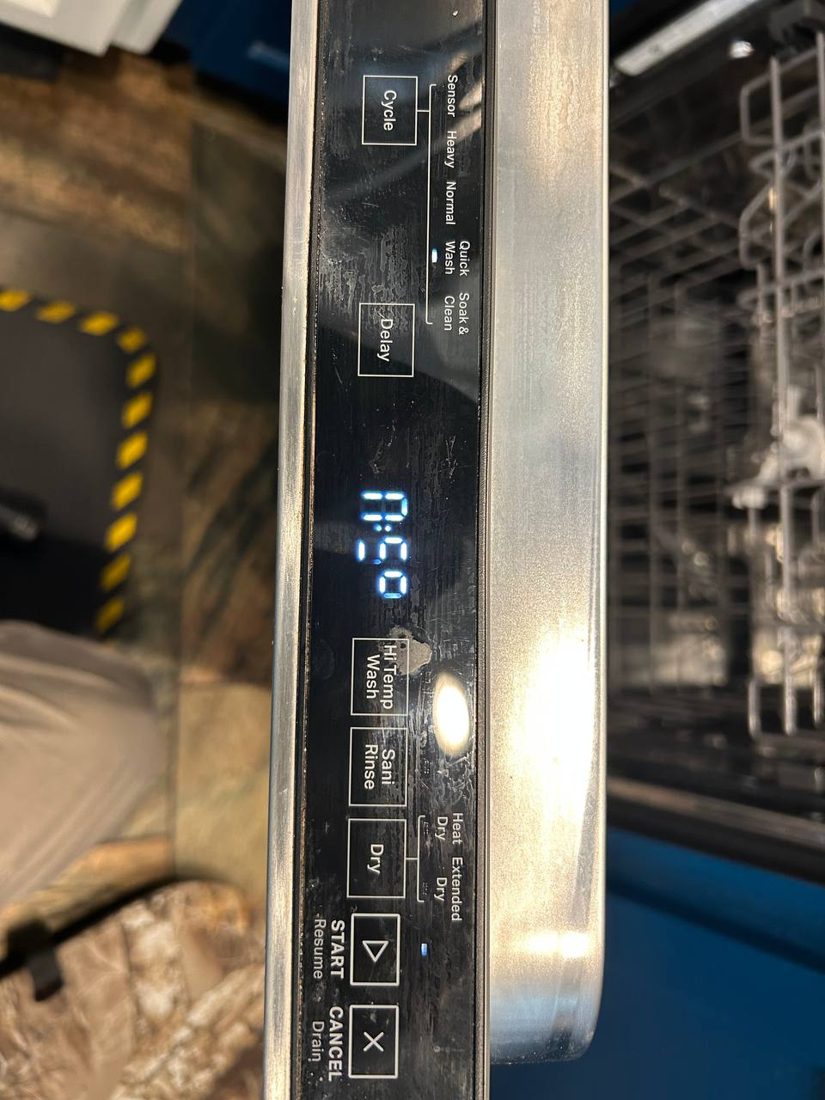
A house on the Manette side, a few blocks up from the bridge: the dryer had been taking two cycles per load for a month, and that week it started shutting off warm-ish and defeated. The owner had already priced heating elements online and asked us, reasonably, to bring one along.
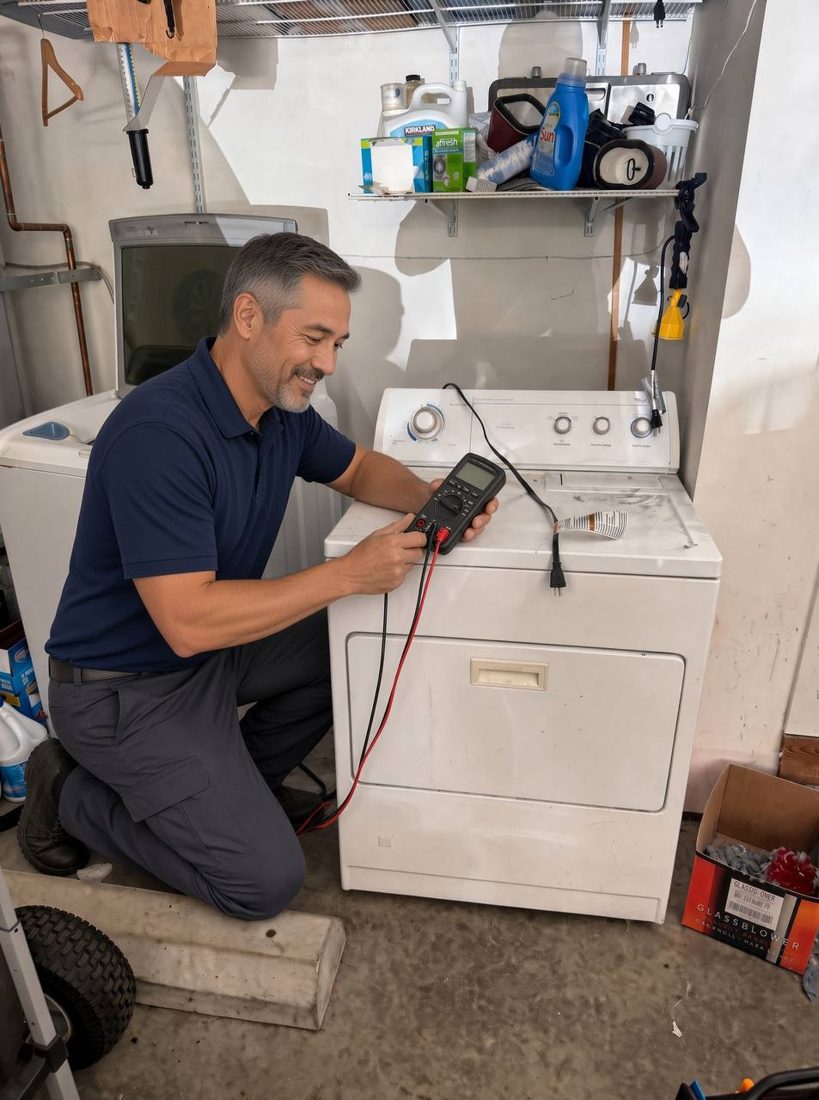
First reading at the machine told a different story. The element drew proper current and glowed exactly as designed — this dryer could make heat all day. What it couldn't do was get rid of it: the exhaust reading at the outside flap was close to zero flutter, and the safety thermostat was doing precisely its job, cutting a healthy heater again and again to keep the drum from cooking itself.
The duct run explained everything. A 1940s Manette house, a remodel that rerouted the vent through a crawl space, and a decade of damp Kitsap lint packing into the low elbow — by the time we opened the run, the elbow held something closer to felt than fluff. While the panels were off we also flagged the 240-volt receptacle: heat-tinted around one terminal, a house-side item worth an electrician's visit before it graduates into a real problem.
Around a third of the county's cold-load dryers are making all the heat they ever did — the patient is the duct. It's exactly why our from-price covers the diagnosis and labor as one number: a technician with nothing to gain from the expensive answer is free to find the true one, and a repair with no parts closes at the floor.
For about a week of placebo, no. The safety thermostat would have kept cutting the new element for the same airflow reason, and the money would have been spent twice.
On older homes, always. We test what feeds the machine because the wall imitates the appliance convincingly — and a house-side finding goes in writing, pointed at the right trade.
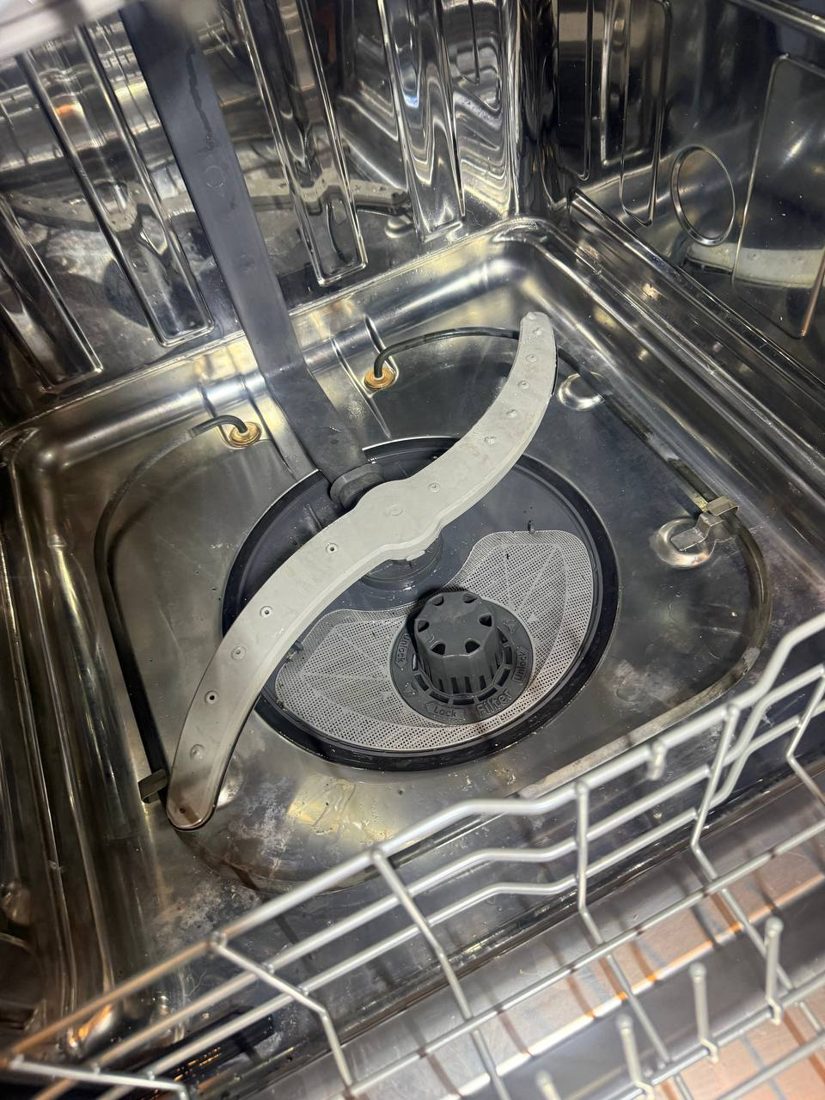
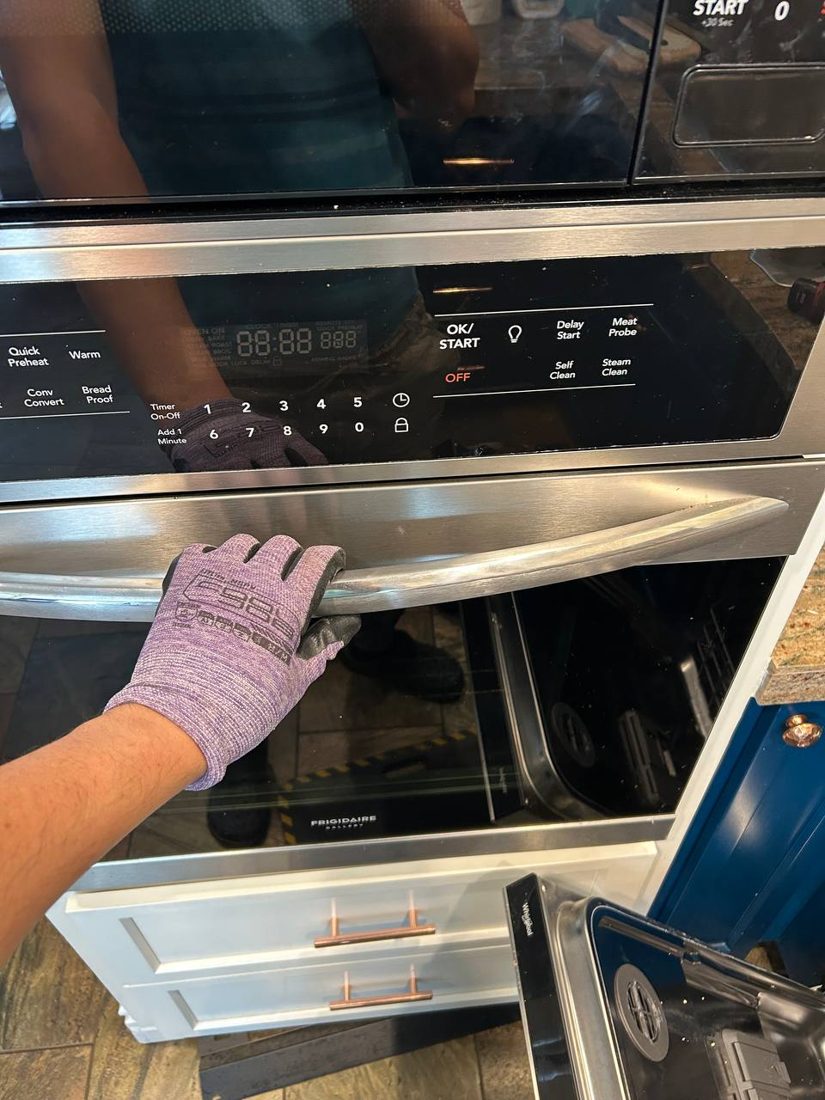
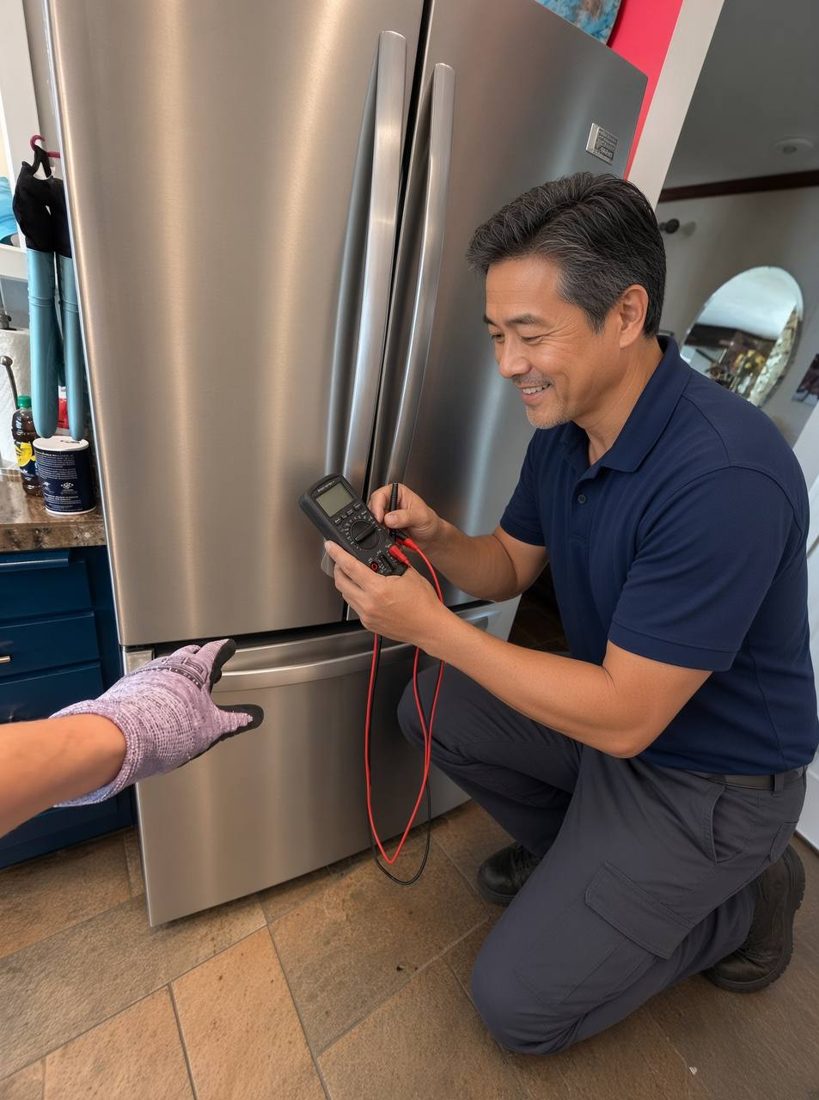
Meters first, opinions second. Two frames of the crew doing what the from-price actually pays for — measured diagnosis at the machine.
The diagnosis that cracked this case is the same one inside every from-price. Call (360) 717-8985 or send the form.